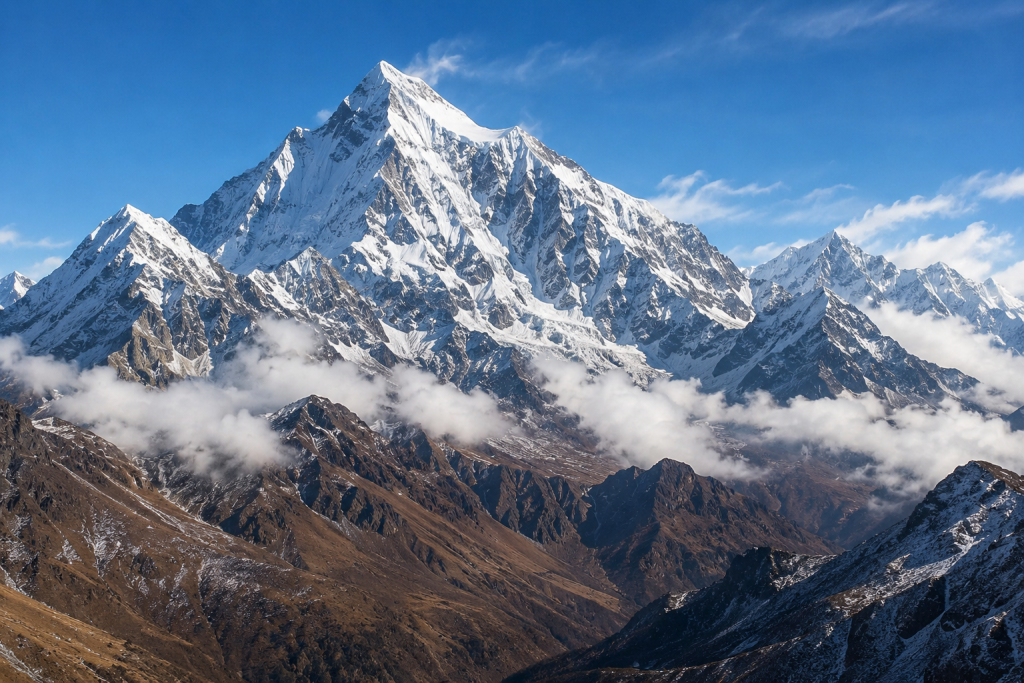
What is High Altitude?
High altitude refers to places that are located at higher elevations above sea level. As you go higher:
- Oxygen levels decrease
- Air pressure becomes lower
- Your body receives less oxygen
Generally, altitude is categorized as:
- Low altitude: 0 – 1,500 meters
- Moderate altitude: 1,500 – 2,500 meters
- High altitude: 2,500 – 3,500 meters
- Very high altitude: 3,500 – 5,500 meters
- Extreme altitude: Above 5,500 meters (like Mount Everest)
When people travel to regions like the Himalayas or the Everest Base Camp, they quickly feel changes in breathing and energy levels.
Is High Altitude Bad for Your Health?
The answer depends on how your body reacts. High altitude is not automatically harmful, but it can become High Altitude Bad for Your Health if:
- You ascend too quickly
- Your body does not acclimatize
- You ignore symptoms of altitude sickness
- You push yourself physically without rest
For many people, the body adapts within a few days. This process is called acclimatization. However, if adaptation fails, health problems may appear. So, high altitude is not dangerous by default—but it can become risky without proper care.
What Happens to Your Body at High Altitude?
Reduced Oxygen Supply
The biggest change is less oxygen in the air. Your lungs have to work harder because each breath contains fewer oxygen molecules than at lower altitudes. To compensate, your breathing becomes faster and deeper, which is your body’s natural way of trying to bring in more oxygen.
At the same time, your heart also has to work harder. It pumps blood more quickly to deliver oxygen to your brain, muscles, and other vital organs. This increased workload can make you feel tired even after small physical activities. You may notice that climbing stairs, walking uphill, or carrying a backpack feels much more difficult than usual.
As oxygen levels continue to drop with higher elevation, your body begins to feel the strain. You might experience shortness of breath, dizziness, or lightheadedness, especially during exertion. Even simple tasks can start to feel exhausting because your muscles are not receiving enough oxygen to perform efficiently.
Over time, your body tries to adapt by producing more red blood cells, which help carry oxygen more effectively. However, this process takes time, so early exposure often feels challenging. Proper acclimatization, slow ascent, and rest are essential for helping your lungs and body adjust safely to high altitude conditions.
Increased Breathing Rate
You start breathing faster to get more oxygen because the air at high altitude contains fewer oxygen molecules. This is one of the first and most noticeable responses of the body when you ascend to higher elevations. Your brain detects the lower oxygen levels and automatically signals your respiratory system to increase breathing speed.
As a result, you begin to take more frequent and deeper breaths. This helps bring in as much oxygen as possible with each inhalation. You may notice that even while resting, your breathing feels heavier or more active than usual. During physical activity, this effect becomes even stronger, and you may feel breathless much more quickly than at lower altitudes.
This increased breathing rate is actually a protective response. It helps maintain oxygen supply to your vital organs, especially the brain and heart. However, it can also lead to side effects such as fatigue, mild dizziness, or a feeling of overexertion.
Over time, if you stay at altitude, your body gradually adjusts and becomes more efficient at using oxygen. But in the early stages, faster breathing is the body’s main way of coping with reduced oxygen availability.
Headaches and Dizziness
Headaches and dizziness are common symptoms at high altitude because your brain receives less oxygen than it is used to. When oxygen levels drop, blood vessels in the brain may expand, which can increase pressure and lead to a mild to moderate headache.
You may feel a constant dull pain or tightness in your head, especially during the first few hours or days at higher elevations. This discomfort can become stronger when you move quickly, climb, or exert yourself. In some cases, dehydration can also make the headache worse, since dry mountain air causes the body to lose more water than usual.
Dizziness often occurs because your brain is temporarily struggling to adjust to lower oxygen levels. You might feel lightheaded, unsteady, or slightly off balance, especially when standing up quickly or walking uphill. This is your body’s way of reacting to reduced oxygen supply.
These symptoms are usually mild and improve as your body acclimatizes to altitude. Rest, proper hydration, and slow ascent can help reduce their intensity. However, if headaches or dizziness become severe or persistent, it may be a sign of altitude sickness and should not be ignored.
What is Altitude Sickness Mount Everest?
Altitude Sickness Mount Everest refers to the illness caused by low oxygen levels at high elevations, especially in regions like the Everest trekking routes.
It is also called Acute Mountain Sickness (AMS).
It usually happens above 2,500 meters, but it is very common in trekking areas like:
- Everest Base Camp
- Kala Patthar
- High Himalayan passes
Types of Altitude Sickness
Altitude sickness has three main stages:
Acute Mountain Sickness (AMS)
This is the mild form.
Symptoms:
- Headache
- Nausea
- Dizziness
- Loss of appetite
- Poor sleep
High Altitude Pulmonary Edema (HAPE)
This is more serious and affects the lungs.
Symptoms:
- Shortness of breath
- Chest tightness
- Coughing (sometimes with froth)
- Weakness
High Altitude Cerebral Edema (HACE)
This is life-threatening and affects the brain.
Symptoms:
- Confusion
- Loss of coordination
- Severe headache
- Difficulty walking
If not treated quickly, it can be fatal.
Why Does Altitude Sickness Mount Everest Happen?
The main reason is lack of oxygen at high elevations.
Other causes include:
- Rapid ascent without acclimatization
- Dehydration
- Overexertion
- Poor physical condition
- Sleeping at high altitude too quickly
Even fit and healthy people can experience it.
Is High Altitude Bad for Your Health in the Long Term?
For most people, high altitude exposure is temporary and not harmful long term.
However:
- Repeated exposure without rest can stress the body
- People with heart or lung disease may face complications
- Sudden exposure can trigger serious altitude sickness
In general, if managed properly, high altitude trekking is safe and does not permanently damage health.So again, High Altitude Bad for Your Health is not always true—it depends on preparation and awareness.
Who is at Risk?
Some people are more sensitive to altitude:
- First-time trekkers
- People over 40 (higher risk in some cases)
- Those with lung or heart conditions
- People ascending too fast
- Dehydrated or exhausted travelers
But even young and healthy individuals can suffer from Altitude Sickness Mount Everest if they ignore precautions.
How to Prevent Altitude Sickness Mount Everest
Prevention is always better than treatment.
1.Acclimatize Properly
- Do not climb too fast
- Take rest days every 2–3 days
2. Drink Plenty of Water
- Stay hydrated
- Avoid alcohol and smoking
3. Eat Proper Food
- Light, high-energy meals
- Avoid heavy oily food
4. Go Slow
- “Climb high, sleep low” rule
- Walk at a steady pace
5. Medication (if needed)
- Diamox (Acetazolamide) is sometimes used (doctor advice required)
Treatment of Altitude Sickness
If symptoms appear:
- Stop ascending immediately
- Rest and hydrate
- Descend to a lower altitude if needed
- Take oxygen if available
- Seek medical help in serious cases
For severe Altitude Sickness Mount Everest, descent is the most effective treatment.
High Altitude Safety Tips for Trekkers
- Always check altitude gain in your itinerary
- Avoid rushing your trek
- Listen to your body
- Travel with experienced guides
- Do not ignore headaches or nausea
- Carry basic medicines
High Altitude and Mount Everest Region
The Mount Everest region is one of the highest trekking destinations in the world. Many trekkers experience altitude-related symptoms here due to extreme elevation.
Popular areas include:
- Everest Base Camp (5,364 m)
- Namche Bazaar (3,440 m)
- Kala Patthar (5,545 m)
This is why Altitude Sickness Mount Everest is a very common topic among trekkers.
Proper acclimatization is essential in this region.
Myths About High Altitude and Health
Myth 1: Only weak people get altitude sickness
False. Even strong athletes can get it.
Myth 2: You can train completely for altitude
Partially false. Training helps, but cannot fully prevent AMS.
Myth 3: Drinking alcohol helps you sleep
False. It increases dehydration and worsens symptoms.
Is High Altitude Bad for Your Health or Not?
To summarize clearly:
- High altitude is NOT automatically bad
- It becomes risky only when your body cannot adjust
- Proper preparation reduces all major risks
- Most trekkers recover quickly after acclimatization
So, the phrase High Altitude Bad for Your Health is only true in uncontrolled situations.
equently Asked Questions (FAQs) on High Altitude Health
Q1: Is high altitude bad for your health?
High altitude is not always bad for your health. However, it can cause problems if your body does not adjust properly to lower oxygen levels. With proper acclimatization, most people can travel safely.
Q2: What is Altitude Sickness Mount Everest?
Altitude Sickness Mount Everest refers to health problems caused by low oxygen at high elevations, especially in the Everest region. It includes symptoms like headache, nausea, dizziness, and in severe cases, breathing and brain-related issues.
Q3: Who is most at risk of altitude sickness?
Anyone can get altitude sickness, but higher risk groups include:
- Rapid climbers without acclimatization
- First-time trekkers
- People with heart or lung issues
- Dehydrated or exhausted travelers
Even fit and healthy people can be affected.
Q4: What are the early symptoms of altitude sickness?
Early symptoms include:
- Headache
- Nausea or vomiting
- Loss of appetite
- Dizziness
- Fatigue
- Poor sleep
If these signs appear, it is important to rest and not climb higher.
Q5: How can I prevent Altitude Sickness Mount Everest?
You can reduce risk by:
- Ascending slowly
- Taking acclimatization days
- Drinking plenty of water
- Avoiding alcohol and smoking
- Eating light and healthy food
“Climb high, sleep low” rule is very effective.
Q6: Can altitude sickness be treated?
Yes, mild cases can improve with rest, hydration, and stopping further ascent. In serious cases, descending to lower altitude is the best treatment. Oxygen support may be needed in severe conditions.
Q7: How high is dangerous for health?
Health risks usually increase above 2,500 meters. Severe altitude sickness is more common above 3,500 meters, especially in places like the Everest trekking routes.
Q8: Can I fully prepare my body for high altitude?
You can improve your tolerance through fitness and acclimatization, but you cannot completely “train away” altitude sickness risk. Proper planning is always necessary.