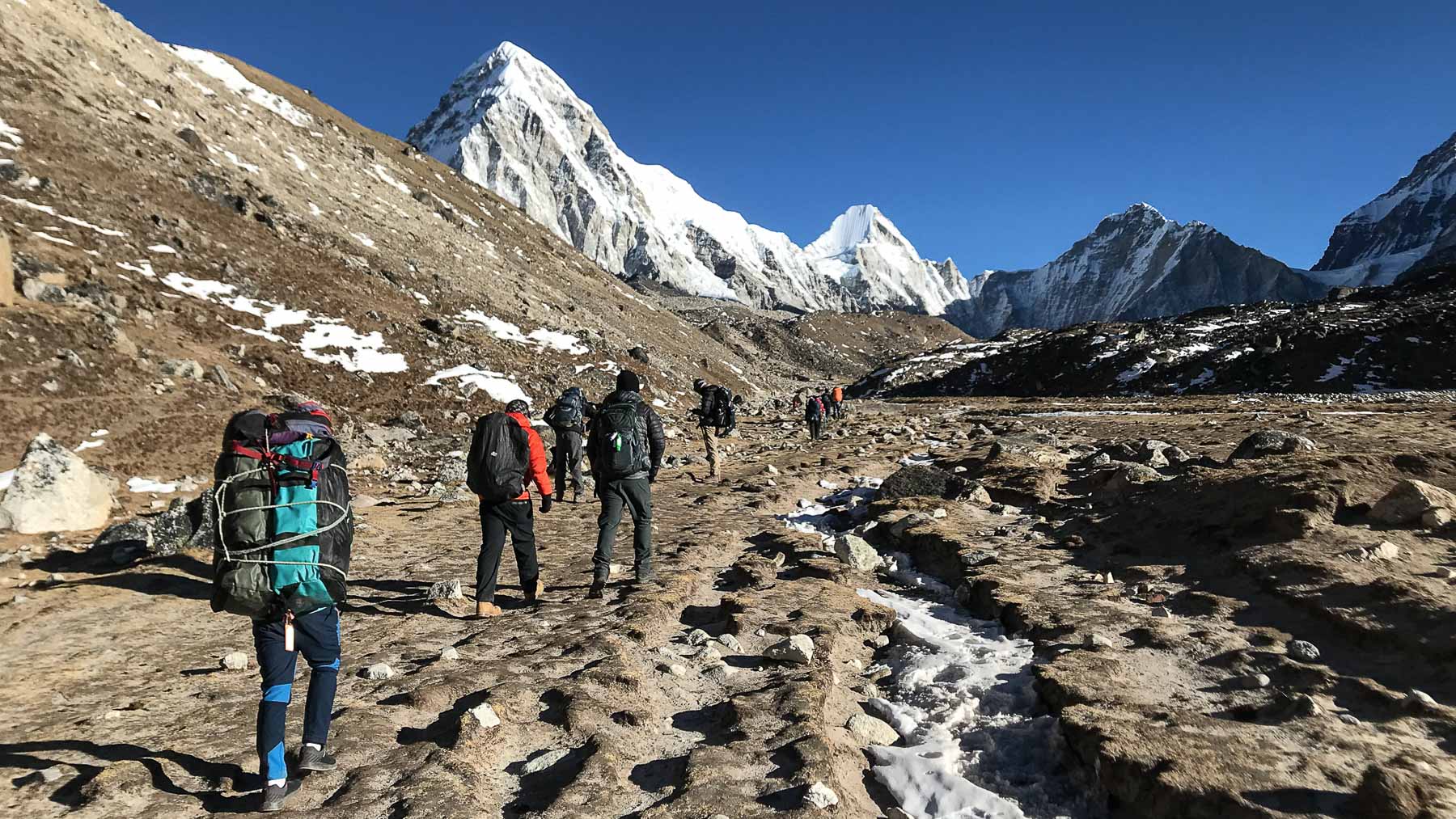
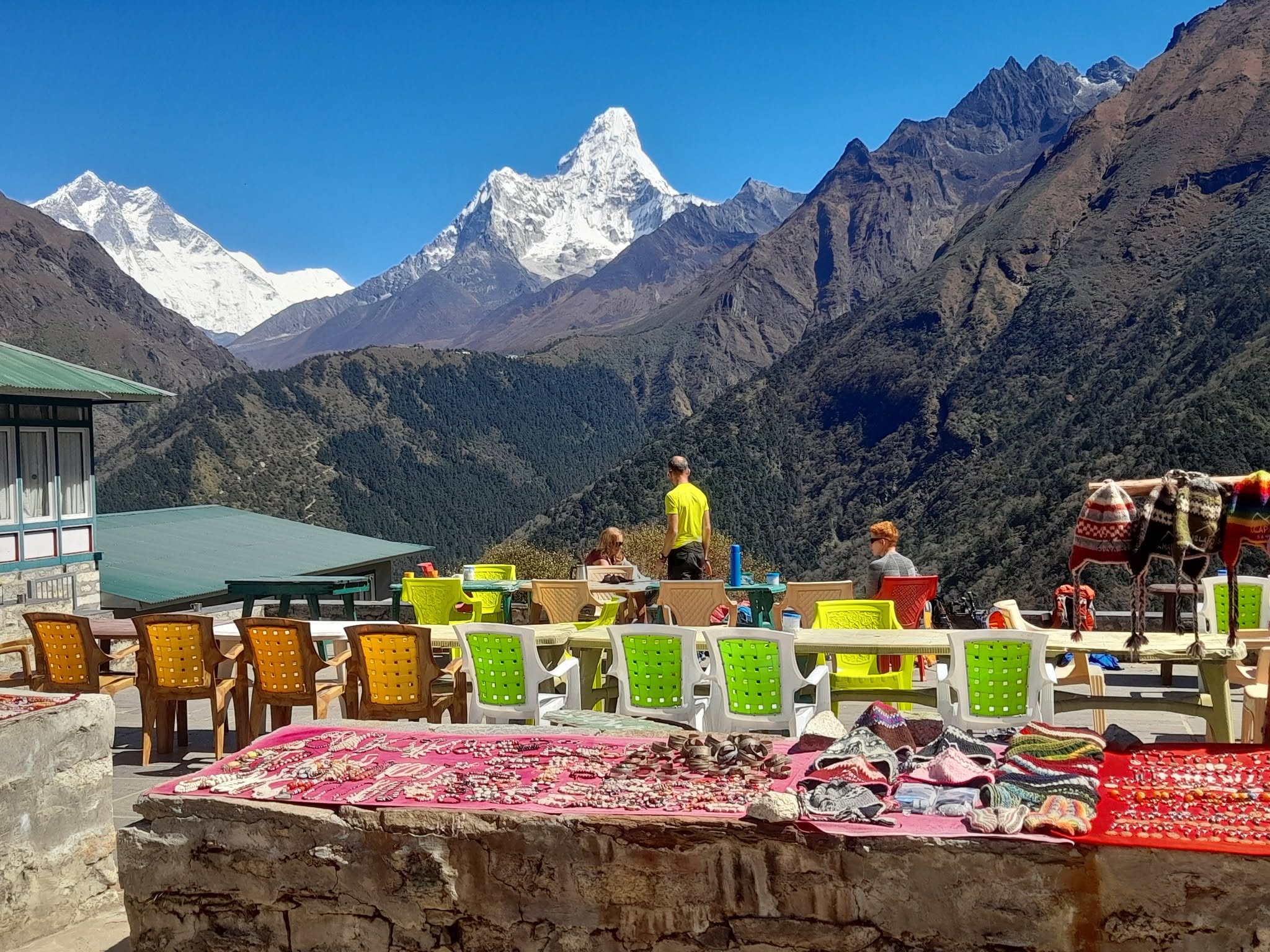
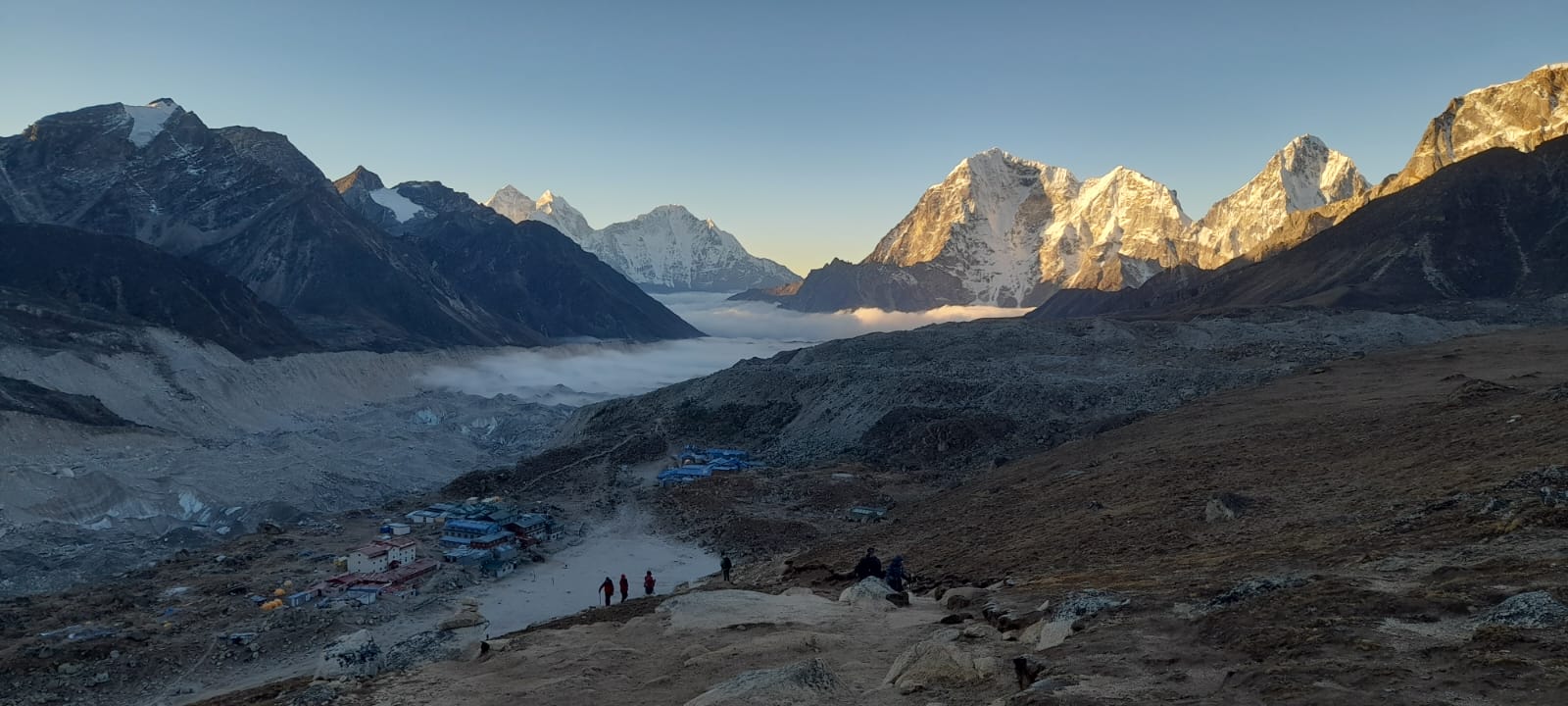


Experience an unforgettable journey through the scenic trails of the Khumbu region with breathtaking views of towering Himalayan peaks, including the majestic Mount Everest, the highest mountain in the world.
Going on the Everest Base Camp Trek is a dream for people who love adventure. Every year, thousands of trekkers from all over the world come to Nepal to see the big, snowy mountains. This journey is not just about reaching the bottom of the tallest mountain in the world—it is also about meeting the friendly Sherpa people, enjoying amazing mountain views, and feeling the excitement of walking where famous climbers once walked.
After several days of walking slowly and getting used to the high mountains, trekkers finally reach Everest Base Camp at 5,364 meters (17,598 feet). Standing at this legendary place and seeing the huge Khumbu Icefall is a dream for many adventurers. Most trekkers also climb Kala Patthar, a small hill nearby, to see one of the best sunrise views of Mount Everest and the surrounding mountains.
The Everest Base Camp Trek is more than just walking—it is a life-changing adventure. You enjoy the mountains, learn about Sherpa culture, and feel proud of what you achieve. For adventure lovers, this trek is one of the most exciting experiences in the Himalayas.
Before starting, it is important to plan your Everest Base Camp Trek Cost & Itinerary carefully. Knowing the Everest Base Camp Trek Cost & Itinerary helps you understand what is included, such as guides, porters, meals, and teahouse accommodation. It also helps you prepare for flights, personal gear, and extra expenses. A clear Everest Base Camp Trek Cost & Itinerary ensures your trip is safe, comfortable, and stress-free.
With Always Himalaya Trek, your Everest Base Camp Trek Cost & Itinerary is well-organized, so you can focus on enjoying the mountains, walking through Sherpa villages, and creating memories that will last a lifetime. Planning your Everest Base Camp Trek Cost & Itinerary ahead of time makes the adventure even more fun and rewarding.
If you don’t want to walk, you can still see Mount Everest by taking the Everest Base Camp Helicopter Tour. It is a fast and fun way to enjoy the mountains!
The Everest Base Camp Trek is possible all year, but choosing the right season makes your trip safe and enjoyable. Weather in the Himalayas changes quickly, and each season gives a different experience.
Spring is a great time for the Everest Base Camp Trek. The weather becomes warmer, and the sky is usually clear. You can see Mount Everest and other mountains clearly. The forests in Sagarmatha National Park are colorful with red and pink rhododendron flowers. You may also see wildlife. Walking is comfortable because the temperatures are not too hot or cold.
Autumn is the most popular time for the Everest Base Camp Trek. After the rainy season, the sky is clear, and the mountain views are amazing. Many trekkers from all over the world walk the trail during autumn. You can also see Nepali festivals like Dashain and Tihar, which makes your trek more fun and cultural.
Trekking in winter is possible but very cold. Snow can cover the trail near Everest Base Camp and Lobuche. There are fewer trekkers, so the trail is quiet, and the mountain views are very clear. Proper warm clothes and experienced guides are very important during this season.
Monsoon is the rainy season and usually not recommended for the Everest Base Camp Trek. Heavy rain makes the trail slippery and sometimes flights to Lukla are delayed. The mountains may be covered by clouds, but the forests and fields are green and peaceful.
Hiring a guide and porter is very helpful for the Everest Base Camp Trek Hire Guide & Porter service. Guides know the mountains very well and help you stay safe on the trail. Porters carry your heavy bags, so you can walk comfortably and enjoy the scenery.
Always Himalaya Trek provides experienced guides and friendly porters. They explain about the mountains, the Sherpa culture, and local traditions. Having a guide and porter makes the trek easier, more enjoyable, and safe, especially for beginners or families.
Choosing the right company is very important for a safe and memorable Everest Base Camp Trek. Always Himalaya Trek offers:
With Always Himalaya Trek, your Everest Base Camp Trek is safe, fun, and full of amazing memories.
As you arrive in Kathmandu, the capital of Nepal, our representative will meet you at the airport and transfer you to your hotel for the day. In the evening, you can roam around the streets of Thamel and enjoy this vibrant city.
Early in the morning, take a flight from Kathmandu to Lukla, a small town in the heart of the Khumbu region. The mesmerizing flight of 45 minutes offers a spectacular view of the Everest region. The same day, begin your trek toward Phakding. The glorious Dudh Koshi River leads you across several Sherpa villages and lush forests. Reaching Phakding, you’ll rest for the day.
The day begins early as beautiful landscapes await in today’s journey. You cross the famous Hillary Suspension Bridge over the Dudh Koshi River. With a steady climb, you’ll reach Namche Bazaar, the bustling Sherpa trade hub at the heart of the Khumbu region. Reaching Namche Bazaar, you’ll roam around the town and settle in for the day.
Acclimatization days are crucial for trekkers’ safety in high altitudes. On this day, you’ll hike around the town to spots like Shyangboche to witness spectacular views of Mount Everest and surrounding peaks. Moreover, you can extend your hike to places like Khumjung Monastery and Hillary School and return to Namche Bazaar in the evening.
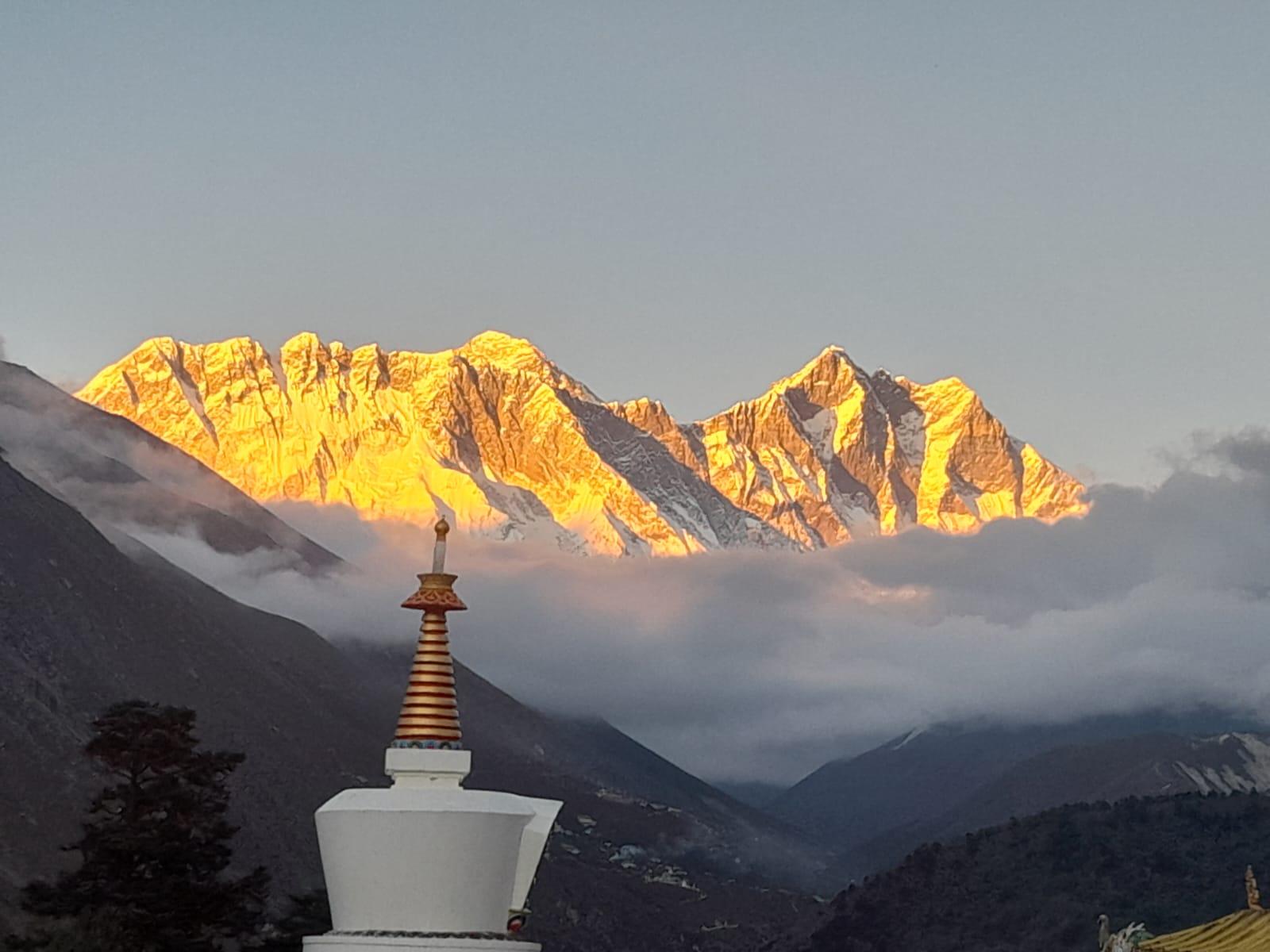
Today’s trek will begin early in the morning. We will visit Tengboche, known for its famous Monastery. The trail passes through beautiful forests and landscapes, offering stunning views of Everest, Lhotse, Nuptse, and Amadablam. We will settle in Tengboche and rest for the day.
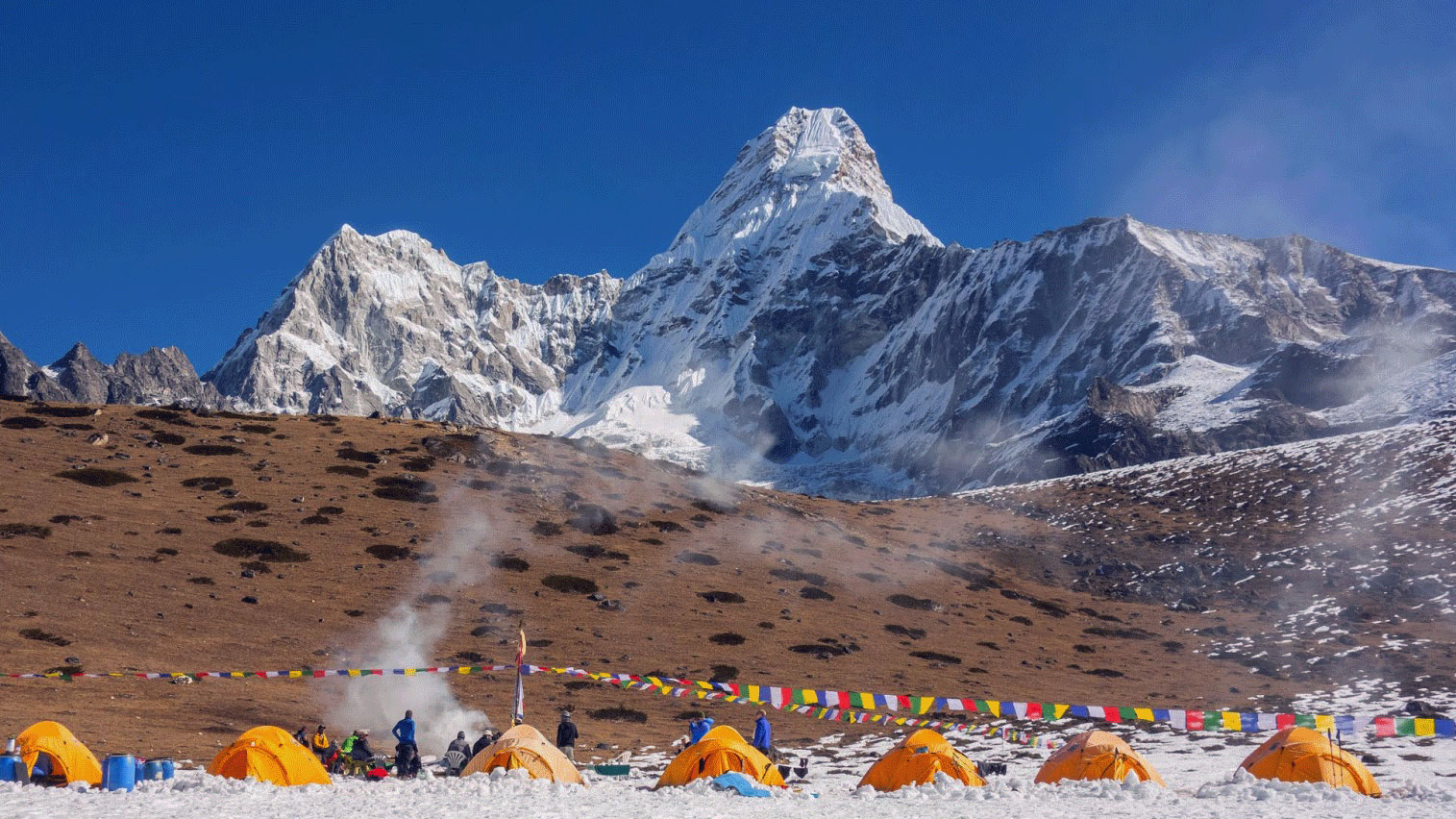
Continue your trek to Dingboche, an alpine village at an altitude of 4,410 meters, famous for its panoramic views of the Amadablam peak. The transition in the landscape is more visible as you approach the rugged terrain at a higher altitude. The trail to Dingboche gets better with each step as you leave behind the greeneries. Settle in Dingboche for the day.
As altitude gain will be high in the next few days, we will stop for another acclimatization day. We will go for small hikes around the Dingboche Valley and rest for the day. Take this day to enjoy seeing the sunrise and set over great peaks like Makalu, Lhotse, Everest, and others. We will spend the night in Dingboche.
The trail to Lobuche begins as you start the day through rocky landscapes. The path gets rougher as you move past the Khumbu Glacier, enjoying magnificent close-up views of the surrounding peaks. Spend the night in Lobuche and prepare for the big day tomorrow.
The day begins earlier than usual as you move towards Gorakshep, the final stop before Everest Base Camp. After lunch in Gorakshep, move towards Everest Base Camp. The captivating view of Everest Base Camp has brought many to tears; it is a truly remarkable place. Spend quality time in the base camp, capture pictures, and make memories on the roof of the world. Descend back to Gorakshep for the night.
Even though we reached Everest Base Camp, our souls yearned for a better view of Everest. This early morning, we’ll be hiking in Kala Patthar, known for some of the best views of Mount Everest. Witnessing one of the best views of our lives, we now descend back to Pheriche for the night.
Begin descending towards Namche Bazaar, passing through Tengboche for a lunch stop. Descending back in the same way, we witness another perspective of the trail, which is equally beautiful.
The day begins as you retrace your steps towards Lukla, passing through Phakding and following the Dudh Koshi River. This majestic journey ends as you take your last steps in the great Sagarmatha National Park. We are grateful for the locals, Mother Nature, and the moment we end the trek. Reaching Lukla, you’ll have plenty of time to reflect on this incredible adventure. A brief celebration is done as you sleep comfortably after days of trekking.
Take the morning flight from Lukla back to Kathmandu, enjoying the scenic flight view for one last time. We return with hearts filled with memories. Upon arrival, you’ll be transferred to your hotel, where we’ll summarize the journey and celebrate with the team. Early evening, enjoy a farewell dinner with your team and roam Thamel’s streets for shopping souvenirs.
| Start | Finish | Availability | Price | |
|---|---|---|---|---|
| september 20 20/09/2026 | octber 09 09/10/2026 | Trip Status available | Starting from $1450 | Book Now |
| October 13 13/10/2026 | 26 October 26/10/2026 | Trip Status guaranteed | Starting from $1450 | Book Now |
| November 02 02/11/2026 | November 15 15/11/2026 | Trip Status guaranteed | Starting from $1450 | Book Now |
| December 07 07/05/2026 | December 20 20/12/2026 | Trip Status guaranteed | Starting from $1450 | Book Now |
Always Himalaya Trek is proudly recognized as one of the trusted trekking companies in Nepal, offering unforgettable Himalayan adventures with experienced guides and dedicated staff to take care of all your travel needs.
We are committed to providing safe, responsible, and sustainable travel experiences while supporting local communities through tourism and social initiatives. Here are 10 reasons why you should choose Always Himalaya Trek for your next adventure!
It is strongly recommended to plan an extra day or two before and after your scheduled trek in case of unexpected flight delays or cancellations. This also allows you some additional time to purchase any necessary clothing, equipment, or gear for your journey.
Please note that Always Himalaya Trek will not be responsible for any inconvenience, delays, or missed international flights caused by unforeseen circumstances such as flight disruptions, airport changes, or weather-related delays.
It is possible to trek to the Everest Base Camp without a guide, however hiring one can greatly enhance your experience, especially when unexpected situations arise or plans need to be adjusted on the trail.
Our experienced and licensed trekking guides are highly trained professionals who ensure safety, support, and smooth logistics throughout the journey. Many of our guests often share that their guide played a key role in making the trek enjoyable, informative, and successful, turning their adventure into a truly memorable experience.
Generally:
Temperatures can feel much colder due to strong winds and altitude, so proper layering and warm gear are essential year-round.
Yes, you can use credit cards in Nepal, especially in major cities like Kathmandu and Pokhara. Visa, Mastercard, and American Express are widely accepted at most hotels, restaurants, and shops.
However, please note that some places may charge an additional fee to cover card transaction costs, and smaller shops or remote trekking areas usually prefer cash in Nepalese rupees.
Yes, most foreign nationals need a visa to enter Nepal. Tourist visas are available on arrival or in advance from Nepalese embassies.
You can get a visa on arrival at Tribhuvan International Airport as well as at some land border entry points.
You need a valid passport (at least 6 months validity), a passport-sized photo, and the visa fee (USD or equivalent).
Tourist visas are commonly issued for 15, 30, or 90 days, with options to extend your stay if needed.
Yes, visas can be extended at the Department of Immigration in Kathmandu or other immigration offices.
Our team will warmly welcome you at the airport and transfer you to your hotel upon arrival.
Credit card use during the trek to the Everest Base Camp is very limited.
In most trekking villages, you cannot rely on credit cards because:
Carry enough Nepalese rupees in cash for the entire trek, especially for:
You can pay the remaining balance after arriving in Kathmandu in two ways:
Most trekkers prefer paying in cash (USD) to avoid additional card fees. The payment is usually collected at your hotel or office in Kathmandu before the start of your trek to the Everest Base Camp.
There are numerous ATM and money exchange facilities available throughout Thamel, where you will be staying in Kathmandu, often just a few steps apart. This makes it very convenient to withdraw cash using international cards, although a small ATM service fee is usually charged per transaction.
You can also easily exchange foreign currency at licensed exchange centers in Thamel, which typically offer competitive and accurate exchange rates.
You don’t need to be an athlete, but you should have good basic fitness and stamina to walk 5–7 hours daily at high altitude.
The Everest Base Camp Trek is considered moderate to challenging due to:
Start training at least 4–8 weeks before:
Yes, beginners can complete it with proper preparation, slow pace, and acclimatization days.
You should start preparing at least 4–8 weeks before the trek to build stamina and fitness.
The most important items are:
Your backpack should ideally be:
Trekking boots are highly recommended, especially for high-altitude treks like the Everest Base Camp Trek, because they provide grip and ankle support.
Yes, you can easily rent:
Accommodation on the Everest Base Camp Trek is mainly tea houses (mountain lodges) with basic rooms and shared facilities.
Most tea houses offer:
Yes, but usually:
Yes, in many places:
Most trekking routes are reached by:
Yes, for the Everest Base Camp Trek you usually take:
Around 25–35 minutes from Kathmandu or Ramechhap (seasonal airport shift)
Yes, it is generally safe, but:
It depends on the package:
Yes:
Exprince Trek guide help to safe travel Mar 2026 • Friends It was grate experience with always Himalaya trek,Mr. Sitaram Karki and Mr. Kumar rai, they are well organized and informed, which is help Read more
Nepal
Best Trekking experience in my life Oct 2025 • Friends I did the Mera Peak trek with Always Himalaya Trek and it was an amazing experience. From the start, everything felt very personal and well orgRead more
united kingdom
Best Trekking company I have been on 3 treks with Sitaram; Langtang, Annapurna Circuit, and Mera Peak, all of which have been amazing. My most recent Trek was to the top of Mera Peak, the higheRead more
Ireland