
Trip Facts
Duration
30 Days
Max. Altitude:
6,812 meters (22,349 ft)
Group size
2 to 15
Best Time for Visit
autumn and spring
Activity
Expedition
Meals
Breakfast,Lunch ,Dinner
DIFFICULTY
Strenuous
LOCATION
Ama Dablam
Trip Ends
Kathmandu,Nepal
Highlights
- Technical climbing to summit one of the most aesthetically pleasing peaks in the Himalayas.
- Walk the famous Everest Base Camp trail and acclimatize through picturesque villages.
- Cultural immersion in traditional Sherpa villages and connect with local people
- Stunning views of Mt. Everest, Lhotse, and other 8000-meter peaks throughout the trail
- Cultural immersion in traditional Sherpa villages
- Multiple camps for proper acclimatization and safe summit attempts
Ama Dablam Expedition Overview
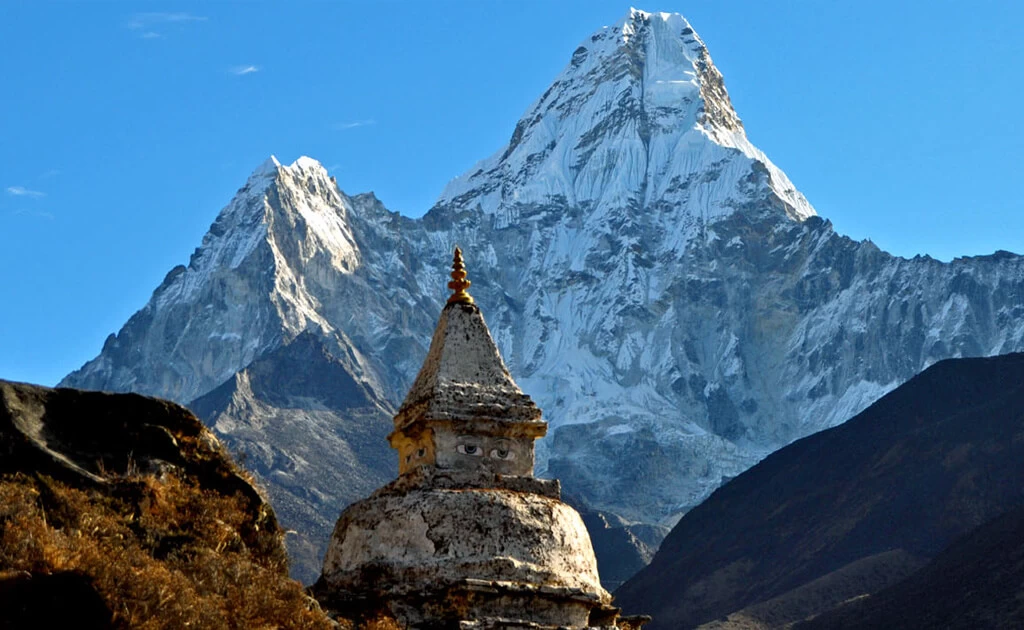
Ama Dablam Expedition is one of the most exciting and rewarding climbing adventures in the Himalayas. Standing at 6,856 m (22,494 ft), Ama Dablam is widely regarded as one of the most beautiful mountains in the world. Located in the heart of Nepal’s Everest region, the peak rises majestically above Tengboche Monastery and can be seen by trekkers following the famous Everest Base Camp trail. Its striking pyramid shape, dramatic ridges, and stunning surroundings make it a dream destination for climbers from around the globe.
Often compared to the Matterhorn of the Swiss Alps, Ama Dablam is an iconic Himalayan peak known for its elegance and technical climbing challenges. The mountain has become a symbol of adventure and mountaineering excellence and has appeared in countless books, posters, and promotional materials worldwide. Since its first successful ascent in 1961 by an Anglo-American-New Zealand team, Ama Dablam has attracted experienced climbers seeking a challenging yet achievable Himalayan expedition.
Our Ama Dablam Expedition follows the classic South West Ridge, the same route used during the first ascent. This route offers a varied and enjoyable climbing experience across rock, snow, and ice terrain. The climb is technically demanding in some sections but remains manageable for climbers with prior mountaineering experience. Well-positioned camps along the ridge provide excellent staging points for a safe and efficient ascent. Apart from a few exposed sections, the route is considered relatively safe under normal weather conditions.
Beyond the climbing experience, the expedition offers breathtaking views of Everest, Lhotse, Nuptse, and many other Himalayan giants. Climbers also have the opportunity to experience the rich Sherpa culture, visit ancient monasteries, and explore the spectacular landscapes of the Khumbu region.
Ama Dablam is often considered the perfect preparation climb for higher Himalayan objectives. Many mountaineers use this expedition as a training ground before attempting Everest or other 8,000-meter peaks. The combination of altitude, technical terrain, and expedition-style climbing provides invaluable experience for future high-altitude adventures.
If you have solid mountaineering skills and are looking to join a professionally organized expedition on one of the world’s most magnificent mountains, the Ama Dablam Expedition is an outstanding choice that will challenge, inspire, and reward you with unforgettable memories.
Ama Dablam Height
The Ama Dablam height is 6,812 meters (22,349 feet) above sea level. Although it is lower than many Himalayan giants, the mountain’s steep slopes and technical routes make it a serious climbing challenge.
The name “Ama Dablam” comes from the Sherpa language. “Ama” means mother, while “Dablam” refers to a traditional pendant worn by Sherpa women. The long ridges on either side of the mountain resemble the arms of a mother protecting her child, while the hanging glacier resembles the sacred pendant.
The impressive Ama Dablam height allows climbers to experience a true Himalayan expedition without spending as much time at extreme altitude as they would on peaks over 8,000 meters. This balance of technical difficulty and manageable altitude is one reason why the mountain has become a favorite among international climbers.
Location of Ama Dablam
Ama Dablam is located in the Khumbu region of northeastern Nepal, inside the famous Sagarmatha area. The mountain lies south of Everest and is clearly visible from several villages along the Everest Base Camp trekking route.
The expedition usually begins with a flight to the gateway town of Lukla. From there, climbers trek through traditional Sherpa villages such as Namche Bazaar, Tengboche, and Pangboche before reaching Ama Dablam Base Camp.
This trekking approach provides excellent opportunities for acclimatization while allowing climbers to experience the culture and hospitality of the local communities.
Best Time for Ama Dablam Expedition
The best seasons for an Ama Dablam Expedition are spring and autumn.
Autumn Season (October to November)
Autumn is considered the most popular climbing season. During this period, the weather is generally stable, skies are clear, and temperatures are favorable for climbing.
Advantages include:
- Stable weather conditions.
- Clear mountain views.
- Lower snowfall.
- Better summit success rates.
Spring Season (April to May)
Spring is another excellent season for climbing Ama Dablam. The weather gradually becomes warmer, and colorful rhododendron forests bloom along the trekking route.
Advantages include:
- Comfortable trekking temperatures.
- Beautiful landscapes.
- Good climbing conditions.
- Longer daylight hours.
Most commercial expeditions prefer autumn because of its reliable weather patterns.
Difficulty Level of Ama Dablam Expedition
The Ama Dablam Expedition is considered a technical climbing expedition. Climbers should have prior experience with:
- Fixed rope techniques.
- Ice axe usage.
- Crampon walking.
- Rock climbing.
- Glacier travel.
- High-altitude mountaineering.
The route includes steep rock sections, exposed ridges, and snow-covered slopes. Climbers often encounter challenging sections that require strength, endurance, and confidence.
Although the Ama Dablam height is lower than Everest, the technical nature of the climb makes it demanding. Therefore, proper training and previous climbing experience are highly recommended.
Route to Ama Dablam Base Camp
Most expeditions follow a classic approach through the Everest region.
Typical trekking route:
- Kathmandu to Lukla flight.
- Trek to Phakding.
- Trek to Namche Bazaar.
- Acclimatization day.
- Trek to Tengboche.
- Trek to Pangboche.
- Trek to Ama Dablam Base Camp.
The trail passes through beautiful forests, suspension bridges, and traditional Sherpa settlements. Along the way, climbers enjoy magnificent views of some of the world’s highest mountains.
Climbing Route
The standard route on Ama Dablam follows the Southwest Ridge.
Major camps include:
Base Camp
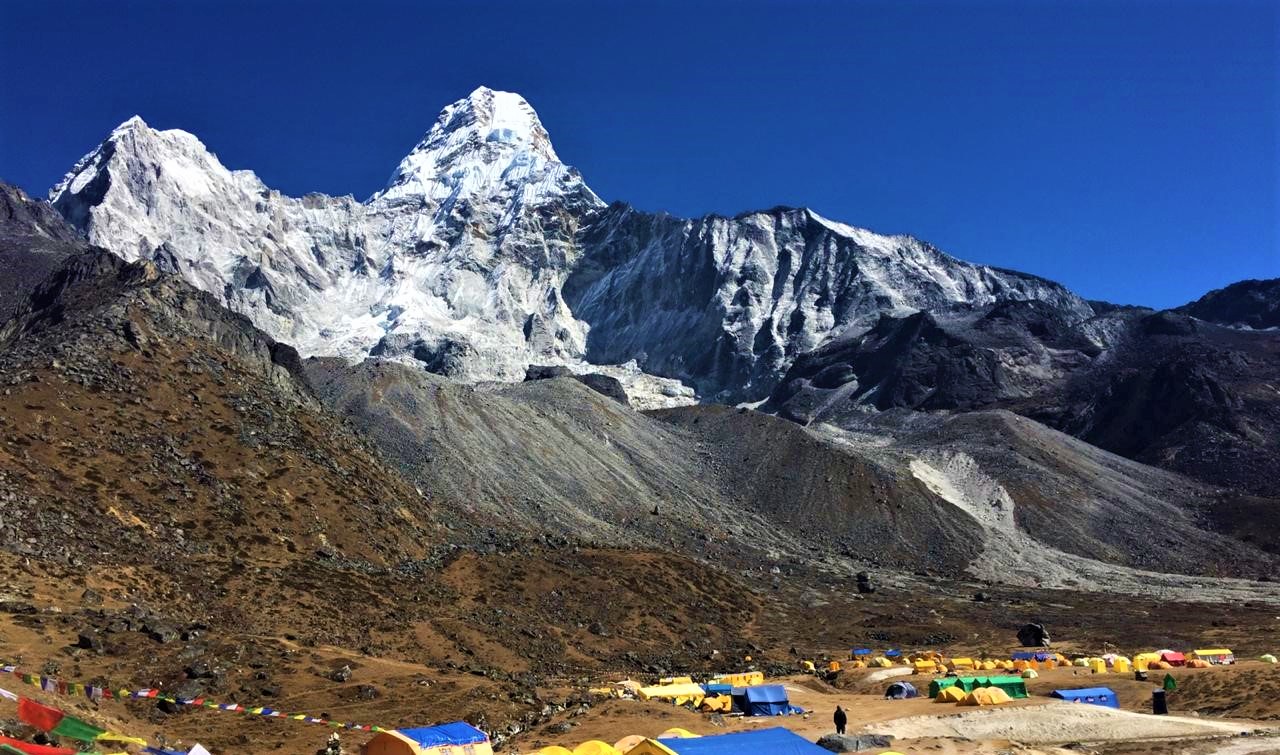
Located at approximately 4,600 meters, Base Camp serves as the main operational center for the expedition.
Camp 1
Camp 1 is established on a rocky ridge and offers stunning views of the surrounding peaks.
Camp 2
Camp 2 is situated on a narrow and exposed ridge. This section is known for its technical climbing and spectacular scenery.
Camp 3
Depending on expedition strategy and conditions, some teams establish Camp 3 before making their summit push.
Summit
The final climb involves steep snow and ice sections before reaching the summit. Climbers are rewarded with breathtaking panoramic views of Everest, Lhotse, Makalu, and countless Himalayan peaks.
Acclimatization During the Expedition
Proper acclimatization is essential for success. Most expeditions spend several days rotating between camps before attempting the summit.
The process helps climbers:
- Adapt to high altitude.
- Reduce the risk of altitude sickness.
- Improve climbing performance.
- Increase summit success rates.
A well-planned acclimatization schedule is one of the most important parts of a successful Ama Dablam Expedition.
Ama Dablam Expedition Climbing Permit Cost
The Ama Dablam expedition climbing permit cost depends on the season and regulations established by the Nepal government.
The primary permit required for climbing Ama Dablam is issued through Nepal’s mountaineering authorities. Climbers also need additional local permits for the trekking region.
Generally, the Ama Dablam expedition climbing permit cost includes:
- Climbing permit fee.
- Local conservation fees.
- Local municipality permits.
- Environmental management charges.
Why Book the Ama Dablam Expedition With Always Himalaya?
Choosing the right company is very important for a safe and memorable Ama Dablam Expedition. Always Himalaya Trek offers:
- Experienced high altitude Sherpa guides for your expedition.
- Expert technical support for fixing ropes on the Yellow Tower and Mushroom Ridge.
- Comfortable Base Camp setup with high quality dining and kitchen services.
- Complete support for managing the Ama Dablam expedition Climbing permit Cost.
- Stunning mountain views including Mount Everest, Lhotse, and Makalu.
- Rigorous health monitoring and acclimatization protocols for a safe summit push.
- 24/7 communication and emergency support throughout your 30 day journey.
- High quality group gear including mountain tents and essential climbing equipment.
- Fair and transparent Ama Dablam expedition Climbing Guide Cost.
With Always Himalaya Trek, your Ama Dablam Expedition is safe, professional, and full of amazing memories.
Ama dablam base camp
Meal
BB plan
Accommodation
overnight kathmandu
As you arrive at Tribhuvan International Airport, our team members will welcome you and transfer you to your hotel for the day. You’ll spend the rest of the day with the team and prepare for your upcoming journey.
Accommodation
overniat at kathmandu
Today is a free day to explore the vibrant streets of Kathmandu Valley and visit various UNESCO World Heritage sites, such as Pashupatinath, Boudhanath, Swayambhunath, and Kathmandu Durbar Square. In the evening, roam around the streets of Thamel and prepare for your expedition.
Accommodation
kathmandu
Get a comprehensive expedition briefing session from our experienced guides. Meet with all the team members and then conduct a final equipment check. You’ll meet your guides and review all the technical aspects of the climb.
Accommodation
overnight at phakding
Accommodation
overnight at lodge
With a steady climb through the Dudh Koshi Valley, you’ll walk through terraced fields, diverse flora, and the Sagramtha National Park fauna. Move towards Namche Bazaar, the traditional hub of the Khumbu region. Reach the bustling trade hub and rest for the night.
Accommodation
overnight at lodge
Rest days are crucial for acclimatization. You’ll acclimatize in Namche Bazaar by visiting a nearby Buddhist monastery and hiking to the Everest View Hotel for stunning panoramic views of Mount Everest.
Accommodation
overnight at lodge
Return on your trail as you trek from Namche Bazaar to Tengboche and visit the largest Buddhist monastery in the Khumbu region. Witnessing stunning mountain views, reach Tengboche and spend the night.
Accommodation
overnight at lodge
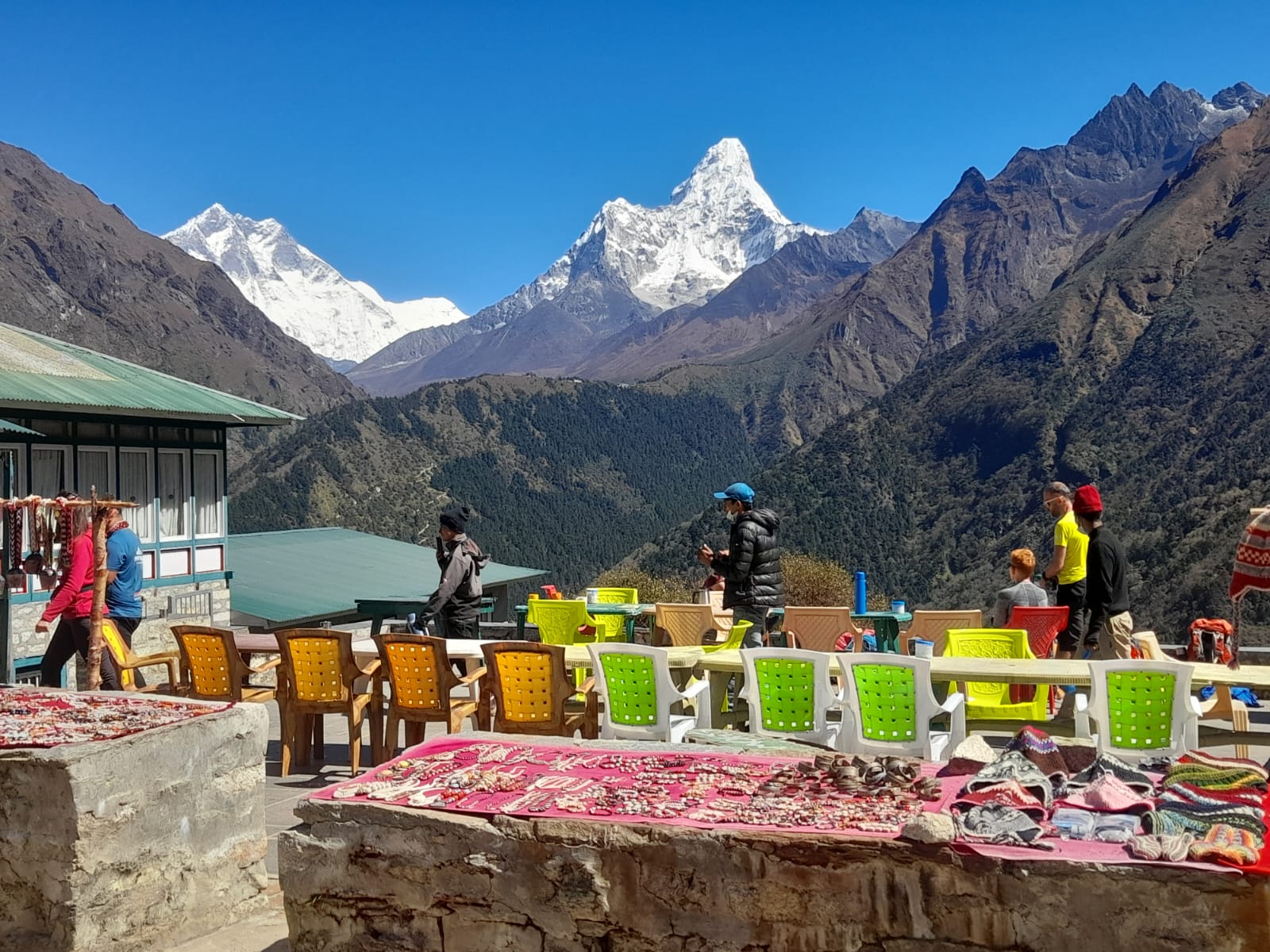
Day 8 is comparatively easy; with just 3-4 hours of hiking, you’ll reach Pangboche. Pangboche provides spectacular views of the great Ama Dablam and surrounding peaks. Once you’ve reached Pangboche, roam around the village, connecting with locals. Spend the night in Pangboche.
Accommodation
Tented Camp
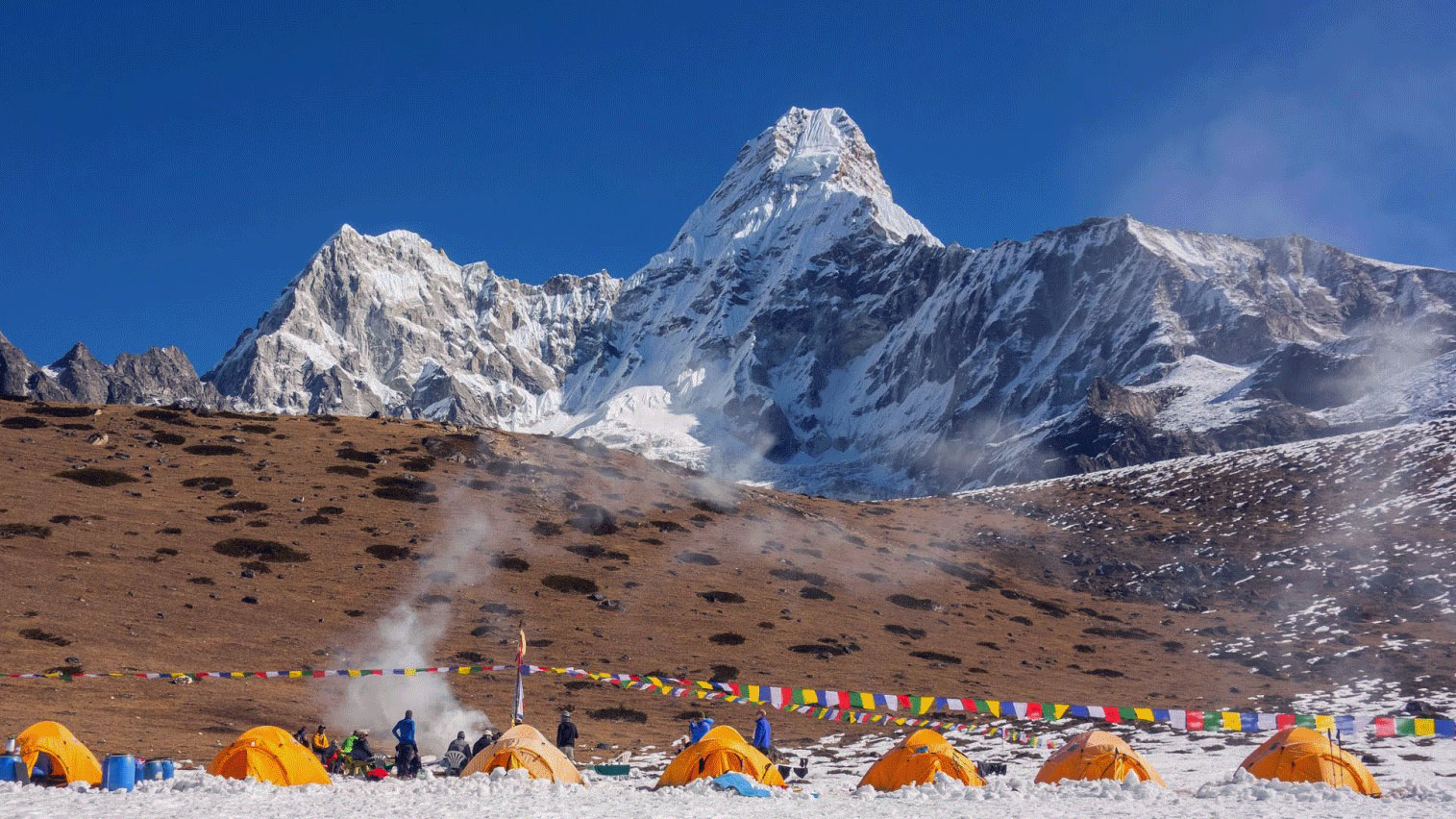
Move on to the Ama Dablam Base Camp, which will be your starting point for the summit phase of the expedition. The Ama Dablam Base Camp is strategically located on a stunning landscape for optimal summit attempts and has a great view of the surrounding mountains. Set up your camp and then spend the night.
Climb to Ama Dablam Base Camp, which will serve as your home for the climbing phase of the expedition.
Altitude
Base Camp (4,570 meters) /Camp 1 (5,700 meters) /Camp 2 (6,000 meters) /Camp 3 (6,300 meters) /Summit (6,812 meters)
Accommodation
tent camp
Weather conditions in the Himalayas are unpredictable and can change within hours. To account for weather conditions, acclimatization, and your summit attempt, we have dedicated 11 days.
You’ll strategically move through Base Camp, Camp 1, Camp 2, and Camp 3 and finally summit the Ama Dablam at 6,812 meters. Throughout these 11 days, you will stay in tents.
Accommodation
overnight at lodge
As you summit this legendary peak, carrying memories of 3 weeks, you’ll start your descent. You’ll retrace your steps from Ama Dablam Base Camp through Pangboche, Tengboche, Namche Bazaar, and Phakding to reach Lukla. While these will be similar trails, you’ll get to witness new perspectives that are equally beautiful. Moreover, as you descend back, make sure to use these days to soak in all the experiences you’ve had so far. As you walk your final steps, thank the Ama Dablam Peak, the Sagarmatha National Park, and the Himalayas for such a wonderful experience.
Accommodation
overnight at kathmandu
With a hearty breakfast, you’ll catch a scenic flight back to Kathmandu. These 45 minutes offer panoramic views of the Himalayas. You came in with empty hearts but now are returning with hearts filled with warm memories. Land in Kathmandu and rest for the day. You can also roam around the vibrant streets of Kathmandu to celebrate your victory. In the evening, you can shop for souvenirs in Thamel.
Join the team for a farewell dinner and celebration of this marvelous journey. Enjoy traditional Nepali cultural programs and share stories with the team.
Cost Includes
- Airport pick-up and drop-off service, by private vehicles.
- Three nights' hotel accommodation in Kathmandu with BB plan
- Transportation includes according to itinerary (Kathmandu–Lukla flights are included for both the outbound and return journeys. However, from September onward, flights to and from Lukla may operate via Ramechhap Airport instead of Kathmandu Airport.
- Lukla Flight Baggage Allowance: 10 kg of checked baggage + 5 kg of hand carry per person. A maximum of 15 kg is allowed per person, excess baggage is not permitted.
- Three meals per day during the trek (breakfast, lunch, and dinner) are provided, along with one cup of tea or coffee per meal. You can choose from the menu, but only one item per meal is allowed.
- Seasonal fresh fruits will be provided every night after dinner
- Accommodation will be in tea houses during the trek, with basic twin-sharing rooms
- An experience English Speaking trained, Government license Holder Guide
- Porter, we assign one porter for every two trekkers, a porter typically carries 20 to 25 kg
- An extra assistant guide is provided for groups with more than 6 participants
- All trekking permits, including Sagarmatha National Park entrance fees and Khumbu Pasanglyamu Rural Municipility entrance fees
- All applicable taxes as per government rules and regulations
- First Aid medical kit, Oxy-meter to check pulse, heart rate and oxygen saturation at higher altitude (Very useful to check Altitude Mountain Sickness (AMS) symptoms)
- Guide and porter salary, food, accommodation and insurance during the trek
- If you need a duffel bag to pack your trekking gear, we provide one free of charge as a souvenir.
- Farewell dinner with traditional Nepali music and cultural dance will be held at a local restaurant
- climbing permit,peak bonus for climbing guide and guide insurence and garbage deposit
Cost Excludes
- Nepal entry visa fee $50 USD for 30 days visa on arrival.
- Lunch and dinner in Kathmandu
- Extra night hotel accommodation in Kathmandu and other than itinerary as well as extra trekking days
- Travel insurance and Mountain rescue service (covers emergency Rescue and Evacuation)
- Personal nature expenses (phone, laundry, water, bar drinks, battery recharge, donations, shopping, extra porters, hot shower etc.)
- Entrance fees for Kathmandu Valley sightseeing cost , as well as monasteries and monuments during the trek
- Tips to Trekking staff (Tips is expected)
- Any other expenses that aren’t mentioned in the section above
- Note: Occasionally, flights from Lukla may be delayed or canceled due to bad weather, which could affect the completion of your trek on time. In such cases, a helicopter flight can be arranged as an alternative. The cost for a shared helicopter flight is $500 less or more depends on per person one way (either Kathmandu to Lukla or Lukla to Kathmandu).
Equipment
General
- Puffy down jacket (We have rental jackets available for rent
- Four-season (zero degree) sleeping bag (We have rental sleeping bags available form an additional cost
- Daypack (35-45 liters recommended) with rain cover
- Sleeping bag liner
Upper Body
- Sun hat or cap
- Knitted hat/Beanie
- Scarf or neck gaiter
- Headlamp
- Sunglasses
Torso
- Technical fabric base layer (light for warmer months, heavy for colder months)
- Technical fabric short (2) and long sleeve (2) shirts
- Waterproof, windproof shell
- Fleece jacket or pullover
Lower Body
- Technical fabric base layer (light for warmer months, heavy for colder months)
- Hiking pants (2)
- Comfortable pants for inside the teahouses
- Waterproof/windproof outer shell pants
- Hiking shorts
Hands
- Wool or technical fabric liner gloves
- Hard-shell outer gloves (insulated for colder months)
Feet
- Wool or technical fabric warm socks
- Hiking socks
- Liner socks (optional such as silk)
- Trekking/hiking boots (waterproof recommended)
- Ice Cleats /Micro Spikes (For trekking from November to March, it's recommended to include Ice Cleats/ Micro Spikes to prevent slipping on icy or wet surfaces.)
- Casual shoes
- Gaiters (lightweight for dust or heavy for snow in colder months)
Undergarments
- Technical fabric/quick drying is best for underwear (opportunities to launder during the trip)
- Sports bras (women)
- Pajamas or sleeping clothes
Optional
- Power bank or extra batteries
- Cameras and mobile phone
- Cards/book
Peak climbing gear
- Climbing boot
- Crampons and harness
- Hiking boot,slippers
- Carabiners 4 pes (2 lock 2 onlock)
- Ascending device jumar
- Descending device ACT and figure of 8
- Helmet ,ice axe and sleeping bag
- Hiking sucks and warm wool sucks
- Warm expedition gloves and thin treking gloves
- Wind proof pant and jacket
- downsuit,expedition bag 50 ltrs for more then 7000 mt
- expedition down jacket for more then 7000 mt
Ama Dablam Expedition FAQ'S
General
Always Himalaya Trek has been a trusted trekking and travel company in Nepal since 2010, known for its experienced local guides, strong commitment to safety, carefully crafted trekking itineraries, and exceptional customer service. Based in Kathmandu, we specialize in delivering authentic Himalayan adventures, cultural tours, and unforgettable trekking experiences across Nepal, Tibet, and Bhutan.
Over the years, we have earned the trust of thousands of travelers from around the world by providing reliable, professional, and personalized travel services. Whether you are planning a challenging mountain expedition, a scenic trekking journey, or a cultural exploration, our dedicated team ensures every detail is handled with care and expertise.
To complete your booking and prepare for your trek, you may be required to provide the following documents:
- A clear copy of your passport (valid for at least six months from your arrival date).
- Recent passport-sized photographs for trekking permits.
- Travel insurance details that cover high-altitude trekking and emergency evacuation.
- Arrival and departure flight information (if available).
- Completed booking and personal information forms.
- Emergency contact details.
For certain trekking peaks, expeditions, or restricted-area treks, additional permits and supporting documents may be required. Our team will inform you in advance if any extra documentation is needed for your chosen adventure.
Yes, our guides are able to communicate in English and assist international travelers throughout their journey. Most of our guides begin their careers as porters and gain several years of trekking experience before becoming licensed trekking guides. Through years of working with travelers from around the world, they develop strong practical English communication skills.
While English is not their native language, they can effectively provide trekking information, explain local culture, coordinate logistics, and assist with any concerns along the route. They also help bridge communication gaps, as many local teahouse owners, shopkeepers, and residents in remote trekking regions may have limited English proficiency.
Yes, all of our climbing guides are professionally trained, government-licensed, and highly experienced in high-altitude mountaineering. They have successfully guided numerous climbers on Mera Peak and are familiar with every aspect of the route, including trail conditions, acclimatization schedules, and summit-day challenges.
Our guides receive regular training in mountain safety, first aid, altitude sickness awareness, and rescue procedures. Their extensive experience on Mera Peak allows them to provide expert guidance, ensure your safety, and help maximize your chances of a successful and enjoyable summit experience.
Weather and Temperature
The best seasons for the Ama Dablam Expedition are spring (April to May) and autumn (October to November). These months offer stable weather, clear skies, excellent mountain views, and favorable climbing conditions.
Temperatures vary depending on altitude and season. Lower elevations in the Khumbu region are generally mild, while temperatures drop significantly at higher camps and near the summit.
Yes. Snowstorms, strong winds, or poor visibility can delay climbing activities and summit attempts. Most itineraries include contingency days to allow for weather-related delays.
Autumn generally offers more stable weather and clearer skies, while late autumn can be colder than spring. Spring temperatures are usually slightly warmer, especially at lower elevations.
Arrival and Visas
Yes. Most foreign nationals require a tourist visa to enter Nepal. A Nepal Tourist Visa can be obtained on arrival at Kathmandu’s Tribhuvan International Airport or in advance from a Nepalese embassy or consulate in your country.
After clearing immigration and collecting your luggage, our representative will meet you at the airport and transfer you to your hotel in Kathmandu.
Yes. Comprehensive travel insurance that covers high-altitude mountaineering, emergency evacuation, medical expenses, and trip cancellations is mandatory for the Ama Dablam Expedition.
Payments and Extra Costs
You can secure your booking with a deposit and pay the remaining balance before the expedition begins. Payments are typically accepted via bank transfer, credit card, or other approved payment methods.
You can secure your booking with a deposit and pay the remaining balance before the expedition begins. Payments are typically accepted via bank transfer, credit card, or other approved payment methods.
Yes. A deposit is required to reserve your place on the expedition and begin the permit and logistical arrangements.
Customer Reviews
Exprince Trek guide help to safe travel Mar 2026 • Friends It was grate experience with always Himalaya trek,Mr. Sitaram Karki and Mr. Kumar rai, they are well organized and informed, which is help Read more
Santa U
Nepal
Best Trekking experience in my life Oct 2025 • Friends I did the Mera Peak trek with Always Himalaya Trek and it was an amazing experience. From the start, everything felt very personal and well orgRead more
Conal higney
united kingdom
Best Trekking company I have been on 3 treks with Sitaram; Langtang, Annapurna Circuit, and Mera Peak, all of which have been amazing. My most recent Trek was to the top of Mera Peak, the higheRead more
Gerard Melly
Ireland