Trip Facts
Duration
15 Days
Max. Altitude:
6,091m/19,980ft
Group size
2-10+
Best Time for Visit
Spring, Summer & Autumn
Activity
Climbing
Meals
Breakfast,Lunch ,Dinner
DIFFICULTY
Moderate & Strenuous
LOCATION
Pisang Peak
Trip Ends
Kathmandu,Nepal
Highlights
- Pisang Summit is one of the most accessible 6000m peaks in Nepal
- Experience the diverse landscapes and wildlife of the Annapurna region
- Cross the Thorong La Pass at 5,416m, making it the highest pass in the world
- Witness the cultural richness of authentic Nepali and Tibetan Buddhist culture.
- Visit the sacred spiritual site of Muktinath
- Stunning views of Annapurna II, III, and IV all along the trail
- Professional climbing guidance and support
Pisang Peak Climbing Overview
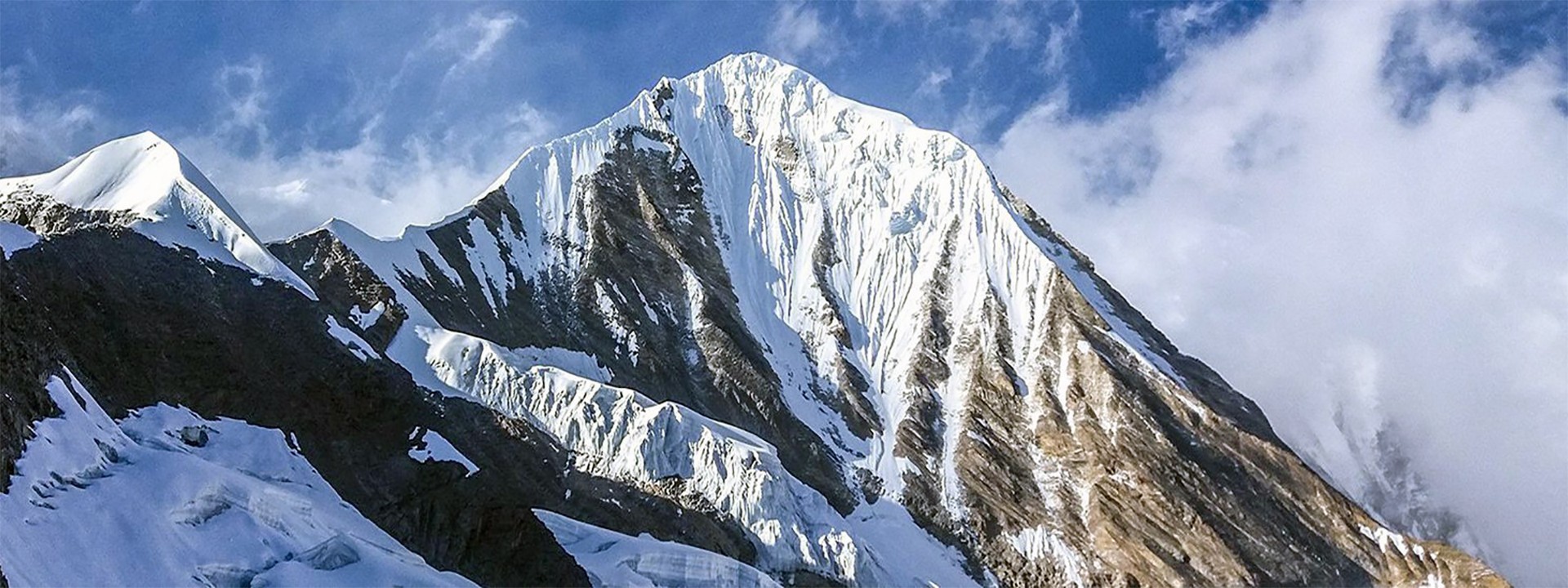
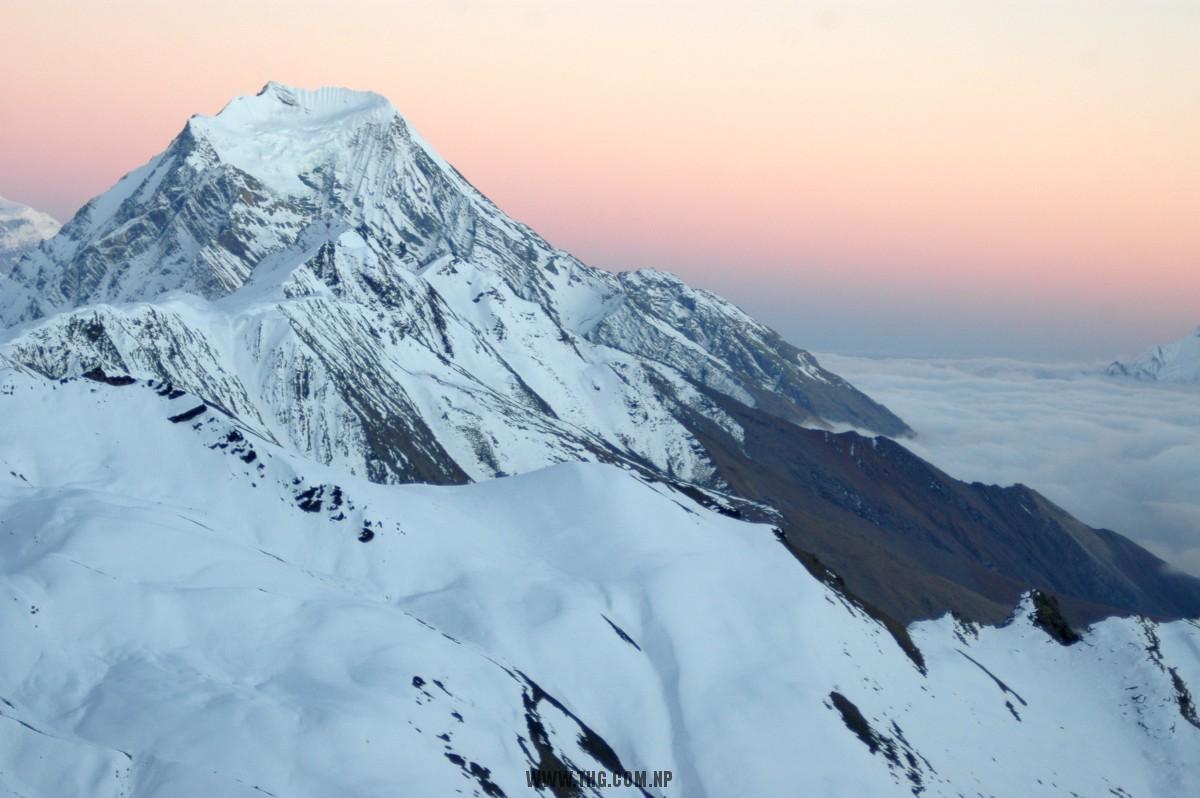
Pisang Peak (6,091m / 19,980ft), located in the majestic Annapurna region of Nepal, offers an exceptional climbing experience that seamlessly blends trekking with mountaineering. As you ascend through the awe-inspiring Annapurna range, the journey transitions from scenic trekking trails to a thrilling alpine climb. Therefore, Pisang Peak serves as a perfect introduction for aspiring climbers eager to explore the world of Himalayan mountaineering.
Moreover, the expedition intertwines the cultural richness of the famous Annapurna Circuit with the technical challenge of summiting a Himalayan peak—making it a once-in-a-lifetime adventure.
Why Choose Pisang Peak?
To begin with, Pisang Peak is considered one of Nepal’s most accessible climbing peaks. Although it requires some basic mountaineering skills, such as the use of ropes, crampons, and ice axes, it is significantly less technical than peaks like Island Peak or Lobuche East. Consequently, it’s ideal for first-time climbers or trekkers looking to graduate into high-altitude mountaineering.
In addition, the climb is managed with a well-structured itinerary and acclimatization schedule ensuring your safety while boosting your chances of summit success.
Breathtaking Scenery Throughout the Journey
As you progress along the route, you’ll witness dramatic changes in scenery. Initially, the trail winds through verdant valleys, terraced fields, and lush alpine forests. Gradually, these landscapes give way to rugged terrain, snowy ridges, and glacial moraines.
Furthermore, the summit rewards climbers with an extraordinary panorama, featuring Annapurna II, III, IV, Gangapurna, Tilicho Peak, and even Manaslu the eighth-highest mountain in the world.
Cultural and Natural Richness
Apart from its natural beauty, Pisang Peak also immerses you in the cultural heart of the Himalayas. The climb takes you through the Annapurna Conservation Area, where you can explore remote villages steeped in Tibetan-Buddhist traditions. Along the way, you’ll encounter prayer wheels, ancient monasteries, mani walls, and traditional yak herders—elements that enrich your mountaineering journey with cultural and spiritual depth.
Geographical Features and Location
Pisang Peak towers above the picturesque village of Pisang, located east of the Annapurna II massif. Strategically positioned within the Annapurna Conservation Area, it lies close to the Annapurna Circuit trail, making it easily accessible for trekkers.
In terms of terrain, the route features grassy meadows at the base, leading to snow-covered ridges as you gain altitude. Eventually, the climb culminates in a narrow summit ridge that offers 360-degree views of the Himalayas and surrounding valleys.
Best Seasons for Pisang Peak Climbing
Spring (March to May)
Spring is undoubtedly one of the most favorable seasons for Pisang Peak climbing. During this time, the weather is relatively stable, skies are mostly clear, and temperatures remain moderate. Moreover, the lower trails come alive with blooming rhododendrons, painting the landscape in vibrant colors.
Autumn (September to November)
Likewise, autumn is another excellent season to attempt the climb. With post-monsoon clarity, dry trails, and pleasant daytime temperatures, it offers ideal conditions for both trekking and peak climbing. In fact, many climbers prefer autumn due to the high visibility and minimal risk of weather disruptions.
In Conclusion
All things considered, Pisang Peak Climbing is an outstanding choice for those seeking their first Himalayan summit. It combines the thrill of mountaineering with the scenic beauty and cultural immersion of the Annapurna region. Whether you’re drawn by the challenge of the climb or the spiritual serenity of the trail, Pisang Peak offers an adventure that is both memorable and achievable.
Itinerary
Altitude
1,400 meters
Meal
Breakfast
As you land at the Tribhuvan International Airport, our team members will greet you with traditional Nepali hospitality. You’ll then be transferred to your hotel in Thamel, where you can roam around and witness the vibrant streets of Kathmandu. In the evening, you’ll meet with the team and get briefings from the guide.
Altitude
1,950 meters
Meal
Breakfast, Lunch, Dinner
Accommodation
Local Lodge
The day starts with an early morning departure from Kathmandu. Joining for a scenic drive, you’ll drive through picturesque landscapes, winding roads, and traditional villages along the famous Prithvi Highway. You’ll make multiple stops and reach Dharapani, an essential gateway to the Annapurna Circuit. Spend the night in the Mountains.
Altitude
2,630 meters
Meal
Breakfast, Lunch, Dinner
Accommodation
Local Lodge
On day 3, your trekking officially begins as you make your way through pine and rhododendron forests. The trail follows the glorious Marshyangdi River, where you get stunning views of waterfalls at each turn. Passing through several traditional villages, you’ll make your way to Chame. Chame serves as the administrative headquarters of Manang district, which offers the first magnificent views of Annapurna II. Spend the night in Chame.
Altitude
3,700 meters
Meal
Breakfast, Lunch, Dinner
Accommodation
Local Lodge
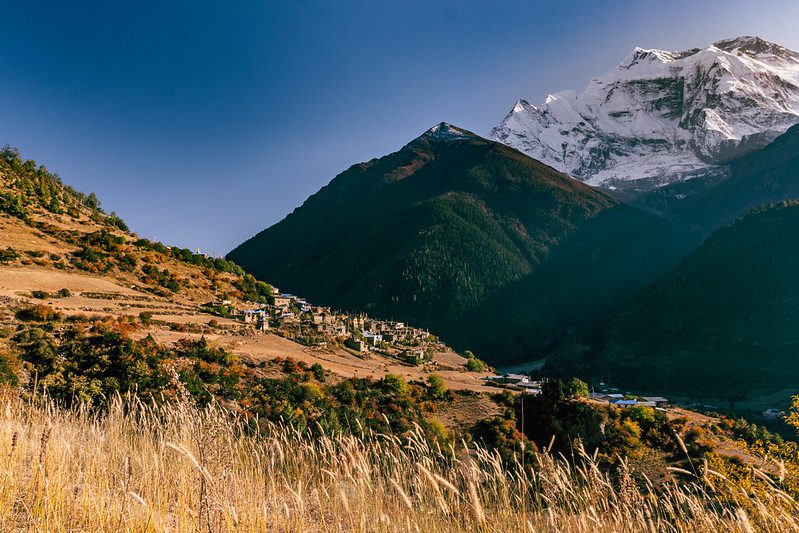
The trail to Upper Pisang remains one of the most scenic sections of the whole trail. The mountain ranges slowly appeared, taking you across apple orchards and dense pine forests. You can feel the landscape transition as you move to higher altitudes to reach Upper Pisang. Upper Pisang offers an authentic experience of Tibetan-influenced culture and architecture. Moreover, this small village provides a stunning view of the Annapurna range and your first sight of Pisang Peak in the distance. Spend the night in Upper Pisang.
Altitude
3,300 meters
Meal
Breakfast, Lunch, Dinner
Accommodation
Local Lodge
Acclimatization days are crucial when trekking at higher altitudes; they allow your body to adapt to increased altitudes and low oxygen density. While acclimatization day doesn’t necessarily translate to rest day, we’ll try our best to get the most out of this day with small hikes around the village. You can also visit the local monastery and connect with the locals. Spend the night in Upper Pisang.
Altitude
4,380 meters
Meal
Breakfast, Lunch, Dinner
Accommodation
Tent
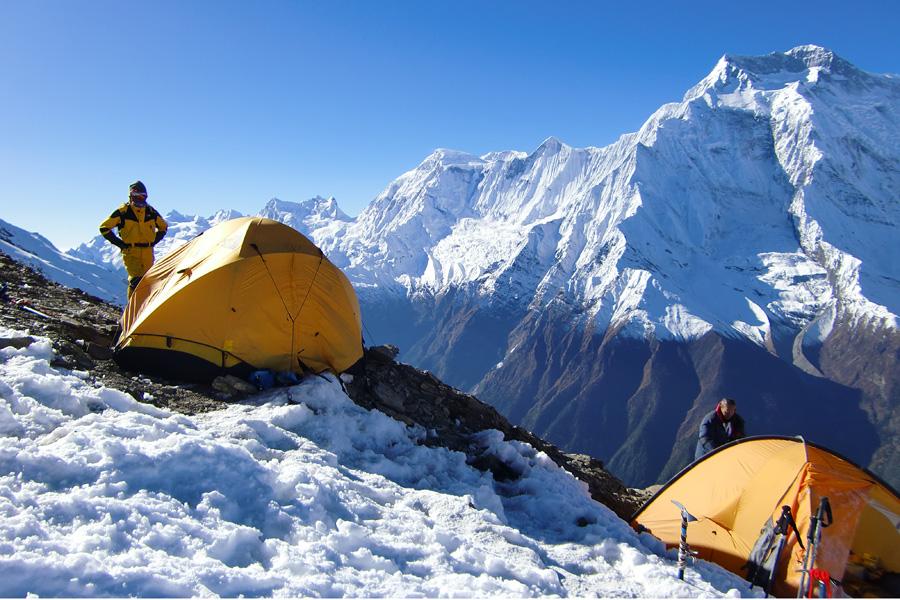
The trail to base camp is completely high-altitude terrain. You’ll pass through yak pastures and rocky landscapes, gaining elevation with each step. The base camp is set up perfectly, providing stunning views of the whole range. Upon reaching the base camp, your climbing team will establish the camp and conduct a climbing gear change. Afterward, you’ll receive rope-handling practice and technical briefings for your upcoming journey. With early dinner, you’ll rest and spend the night.
Altitude
5,400 meters
Meal
Breakfast, Lunch, Dinner
Accommodation
Tent
With a challenging ascent, you’ll move to high camp. The route gets more technical, requiring careful navigation through rocky terrain. You’ll move across fixed ropes to reach the high camp. You’ll receive final instructions for the summit attempt and safety protocols here. The evening is devoted to rest and final preparations. With a stunning sunset worldwide, you’ll spend the night at the top of the world.
Altitude
Summit - 6,091 meters
Meal
Breakfast, Lunch, Dinner
Accommodation
Tent
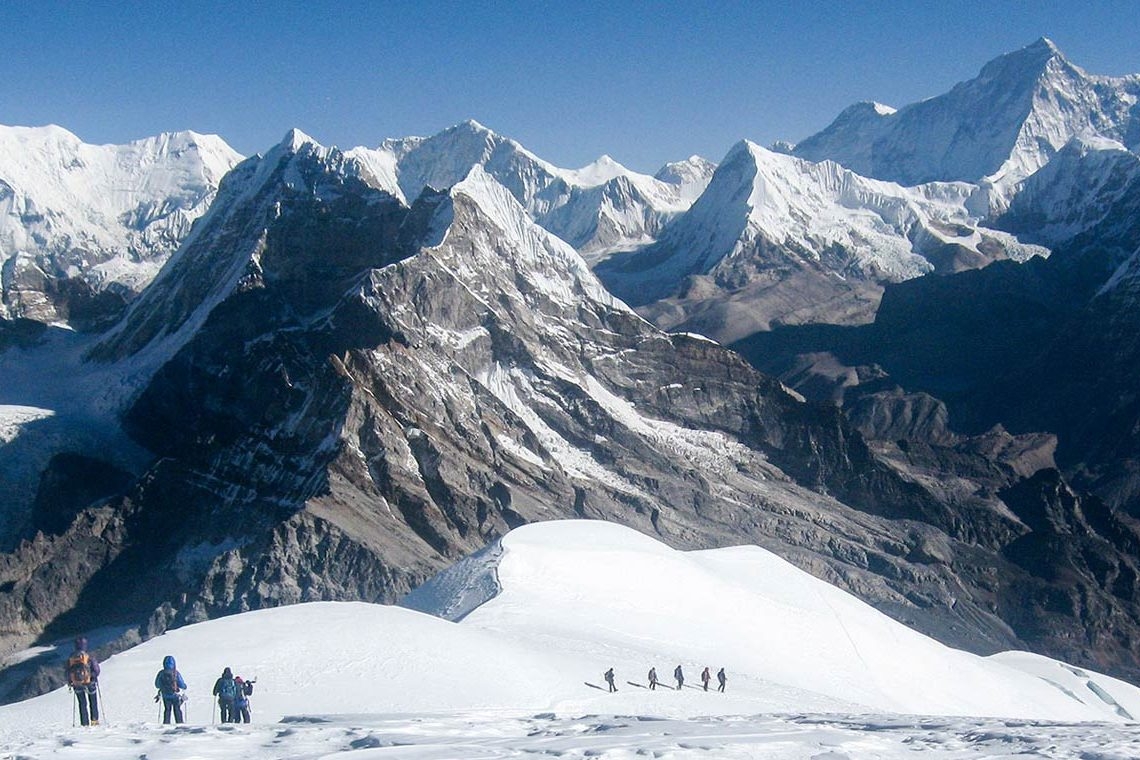
The summit push begins early, around 2-3 AM, with a light breakfast. The initial climb to the summit involves snow and ice sections that require technical climbing skills. Under the guidance of our expert guides and with the help of your technical skills, you’ll make your way to Summit Ridge. Summiting the Pisang Peak is an overwhelming experience that leaves many in tears. Making memories and being in the moment after witnessing the stunning views of the entire Annapurna range, you’ll return to the base camp.
Altitude
3,519 meters
Meal
Breakfast, Lunch, Dinner
Accommodation
Lodge
Descend begins as you descend from mountainous terrain to civilization in Manag Valley. The descent presents a unique perspective of the whole region, making it equally fascinating. Manang remains an ancient village rich with Tibetan Buddhist culture, which provides comfortable accommodation. Connect with the locals, share stories, and spend the night in Manang.
Altitude
4,110 meters
Meal
Breakfast, Lunch, Dinner
Accommodation
Lodge
A comparatively shorter day allows for rest after such taxing days. The trail connects back to the Annapurna Circuit trek, which leads you to Yak Kharka. You’ll pass through summer grazing grounds for yaks along spectacular mountain views. Reaching Yak Kharka, you’ll get basic yet comfortable accommodation. You can roam around the village in the afternoon and witness its serenity. Spend the night in Yak Kharka.
Altitude
4,600 meters
Meal
Breakfast, Lunch, Dinner
Accommodation
Lodge
Another short day, as you approach the base of Thorong La Pa. The trail gets steeper, with the air noticeably thinner. Thorong Phedi has served as the base camp for centuries when crossing the pass. You can roam around the village in the afternoon and connect with the locals. Prepare for the early morning pass crossing tomorrow and spend the night.
Altitude
Thorong La (5,416m), Muktinath (3,800m)
Meal
Breakfast, Lunch, Dinner
Accommodation
Lodge
Begin the day relatively early, around 4 AM, for the journey is long today. The ascent to Thorong La is challenging but equally rewarding, with stunning views from the pass. Crossing the highest pass of the world, you’ll enter the Mustang region of Nepal, the hidden kingdom of Nepal. Descend all the way to Muktinath, a sacred site for both Hindus and Buddhists, which offers comfortable lodging and a chance to visit this sacred site. Spend the night there.
Altitude
8-9 hours
Meal
Breakfast, Lunch, Dinner
Accommodation
Hotel
Early in the morning, you’ll take a scenic drive from Muktinath to Pokhara, passing through the Kali Gandaki Gorge, the world’s deepest gorge. The journey passes through stunning landscapes and traditional villages of Jomsom, Marpha, Beni, and Kushma, and then to Pokhara. In the evening, you can roam around the beautiful lakeside of Pokhara and relax.
Meal
Breakfast, Farewell Dinner
Accommodation
Hotel
The return drive to Kathmandu is perfect for soaking up all the experiences made so far. Reach and rest in Kathmandu.
Meal
Breakfast
After a hearty breakfast, you’ll be transferred to your hotel. This will conclude the wonderful journey. Our team will always cherish the memories made together.
Cost Includes
- Airport pick-up and drop-off service, by private vehicles.
- Two nights' hotel accommodation in Kathmandu and one night at pokhara with BB plan
- Transportation includes
- Three meals per day during the trek (breakfast, lunch, and dinner), along with one cup of tea or coffee per meal.you can choose only one items per meal.
- Seasonal fresh fruits will be provided every night after dinner
- Accommodation will be in tea houses during the trek, with basic twin-sharing rooms
- An experience English Speaking trained, Government license Holder Guide
- Porter, we assign one porter for every two trekkers, a porter typically carries 20 to 25 kg
- An extra assistant guide is provided for groups with more than 6 participants
- All applicable taxes as per government rules and regulations
- First Aid medical kit, Oxy-meter to check pulse, heart rate and oxygen saturation at higher altitude (Very useful to check Altitude Mountain Sickness (AMS) symptoms)
- Guide and porter salary, food, accommodation and insurance during the trek
- If you need a duffel bag to pack your trekking gear, we provide one free of charge as a souvenir.
- Farewell dinner with traditional Nepali music and cultural dance will be held at a local restaurant
- Acap fee,climbing permit,climbing guide insurance and his peak bonus.
Cost Excludes
- Nepal entry visa fee $50 USD for 30 days visa on arrival.
- Lunch and dinner in Kathmandu
- Extra night hotel accommodation in Kathmandu than itinerary as well as extra trekking days
- Travel insurance and Mountain rescue service (covers emergency Rescue and Evacuation)
- Personal nature expenses (phone, laundry, water, bar drinks, battery recharge, donations, shopping, extra porters, hot shower etc.)
- Entrance fees for Kathmandu Valley sightseeing that cost as well as monasteries and monuments during the trek
- Tips to Trekking staff (Tips is expected)
- Any other expenses that aren’t mentioned in the section above
Equipment
General
- Puffy down jacket (We have rental jackets available for rent
- Four-season (zero degree) sleeping bag (We have rental sleeping bags available form an additional cost
- Daypack (35-45 liters recommended) with rain cover
- Sleeping bag liner
Upper Body
- Sun hat or cap
- Knitted hat/Beanie
- Scarf or neck gaiter
- Headlamp
- Sunglasses
Torso
- Technical fabric base layer (light for warmer months, heavy for colder months)
- Technical fabric short (2) and long sleeve (2) shirts
- Waterproof, windproof shell
- Fleece jacket or pullover
Lower Body
- Technical fabric base layer (light for warmer months, heavy for colder months)
- Hiking pants (2)
- Comfortable pants for inside the teahouses
- Waterproof/windproof outer shell pants
- Hiking shorts
Hands
- Wool or technical fabric liner gloves
- Hard-shell outer gloves (insulated for colder months)
Feet
- Wool or technical fabric warm socks
- Hiking socks
- Liner socks (optional such as silk)
- Trekking/hiking boots (waterproof recommended)
- Ice Cleats /Micro Spikes (For trekking from November to March, it's recommended to include Ice Cleats/ Micro Spikes to prevent slipping on icy or wet surfaces.)
- Casual shoes
- Gaiters (lightweight for dust or heavy for snow in colder months)
Undergarments
- Technical fabric/quick drying is best for underwear (opportunities to launder during the trip)
- Sports bras (women)
- Pajamas or sleeping clothes
Optional
- Power bank or extra batteries
- Cameras and mobile phone
- Cards/book
Peak climbing gear
- Climbing boot
- Crampons and harness
- Hiking boot,slippers
- Carabiners 4 pes (2 lock 2 onlock)
- Ascending device jumar
- Descending device ACT and figure of 8
- Helmet ,ice axe and sleeping bag
- Hiking sucks and warm wool sucks
- Warm expedition gloves and thin treking gloves
- Wind proof pant and jacket
- downsuit,expedition bag 50 ltrs for more then 7000 mt
- expedition down jacket for more then 7000 mt
FAQ'S
Conclusion
Pisang Peak climbing is the perfect blend of cultural immersion and high-altitude adventure. This carefully crafted itinerary by Always Himalaya ensures proper acclimatization and safety protocols. This trek has everything from the traditional villages of the Annapurna region to the technical climbing of the great Pisang Peak. Join today with Always Himalaya.
Customer Reviews
Exprince Trek guide help to safe travel Mar 2026 • Friends It was grate experience with always Himalaya trek,Mr. Sitaram Karki and Mr. Kumar rai, they are well organized and informed, which is help Read more
Santa U
Nepal
Best Trekking experience in my life Oct 2025 • Friends I did the Mera Peak trek with Always Himalaya Trek and it was an amazing experience. From the start, everything felt very personal and well orgRead more
Conal higney
united kingdom
Best Trekking company I have been on 3 treks with Sitaram; Langtang, Annapurna Circuit, and Mera Peak, all of which have been amazing. My most recent Trek was to the top of Mera Peak, the higheRead more
Gerard Melly
Ireland